Guide one
Incubation Basics
An incubator copies what a broody hen does: it keeps the eggs warm, damp enough and turned. Get the basics steady before the eggs go in and the weeks that follow are mostly waiting.
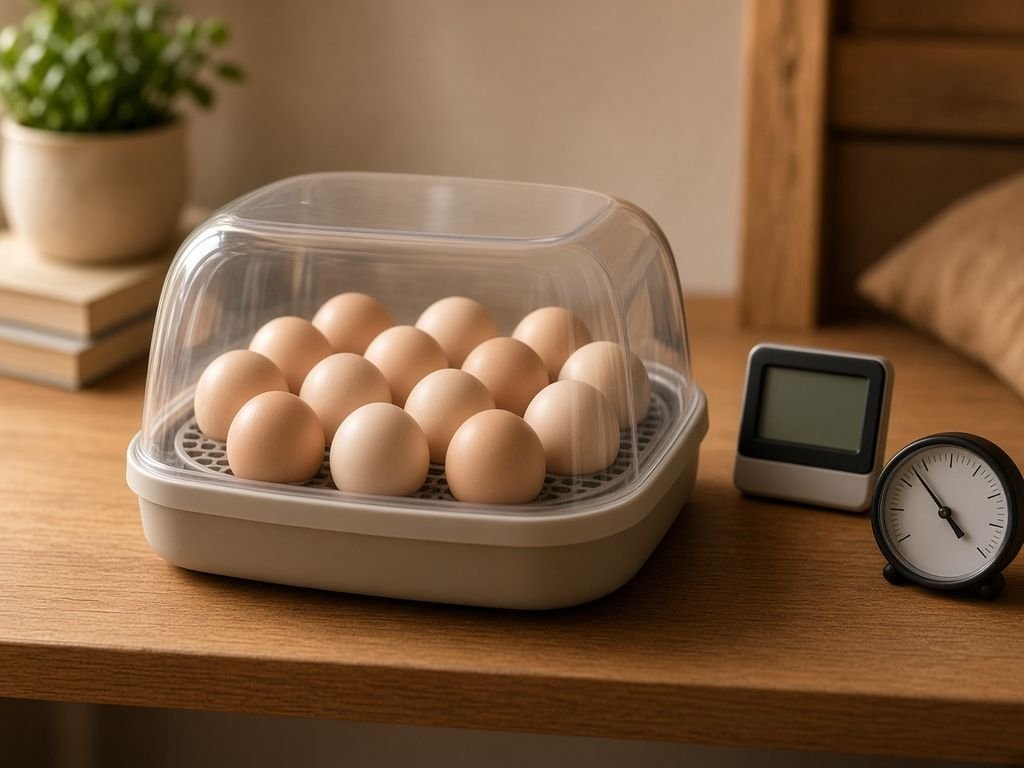
Warmth
Many guides quote about 37.5 °C (99.5 °F) for a forced-air incubator and a little higher at egg height for a still-air one. Your manual’s figure comes first. Use a thermometer you trust, and place it at egg level.
Humidity
Eggs lose water as they develop. Most keepers aim for moderate humidity through the first eighteen days and a higher level for the last three. Too dry or too damp can both cause trouble, so track what you see in the air cell when you candle.
Where to put it
- A room with a steady temperature, away from direct sun, draughts and radiators.
- A firm, level surface where it will not be knocked.
- Close enough to check daily, but not opened more than needed.
Choosing eggs
Use clean, fresh, undamaged eggs and handle them with clean hands. Store them pointed end down for a short time before setting, and let them come to room temperature first.
Keep a log
Write down the set date, daily temperature, humidity and any water top-ups. A simple notebook makes it easy to spot a problem early.
Elhtch is a reading guide, not veterinary advice. Wash your hands after touching eggs, chicks or equipment, and check local rules before keeping poultry.